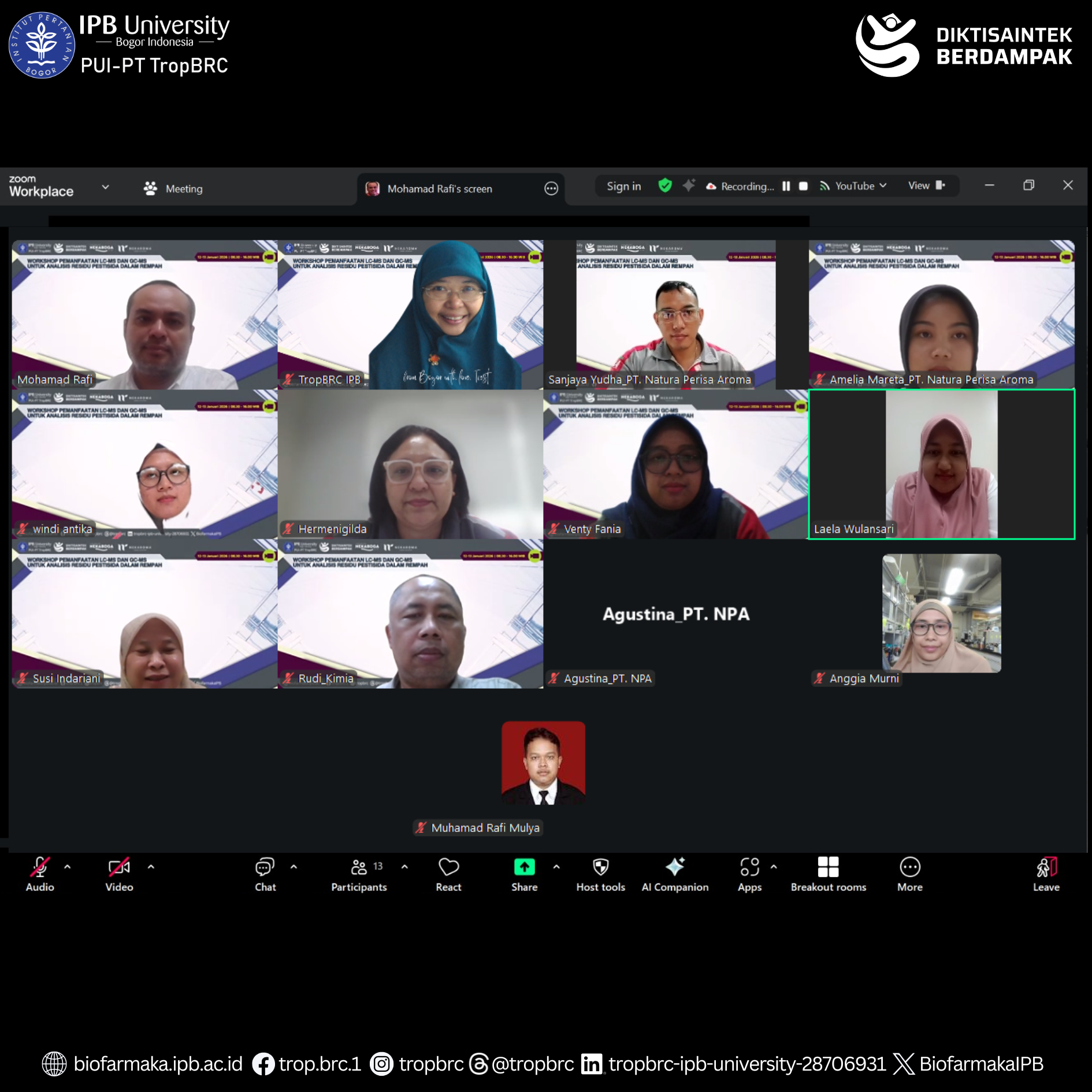
The Tropical Biopharmaca Research Center (TropBRC), LRI-PGK IPB University, organized a Workshop on the Application of LC-MS and GC-MS for Residue Analysis in Spices as part of its efforts to support the improvement of spice product quality and safety through modern analytical technologies. The workshop was attended by five participants from PT Natura Perisa Aroma and featured speakers from IPB University and Universitas Pertahanan.
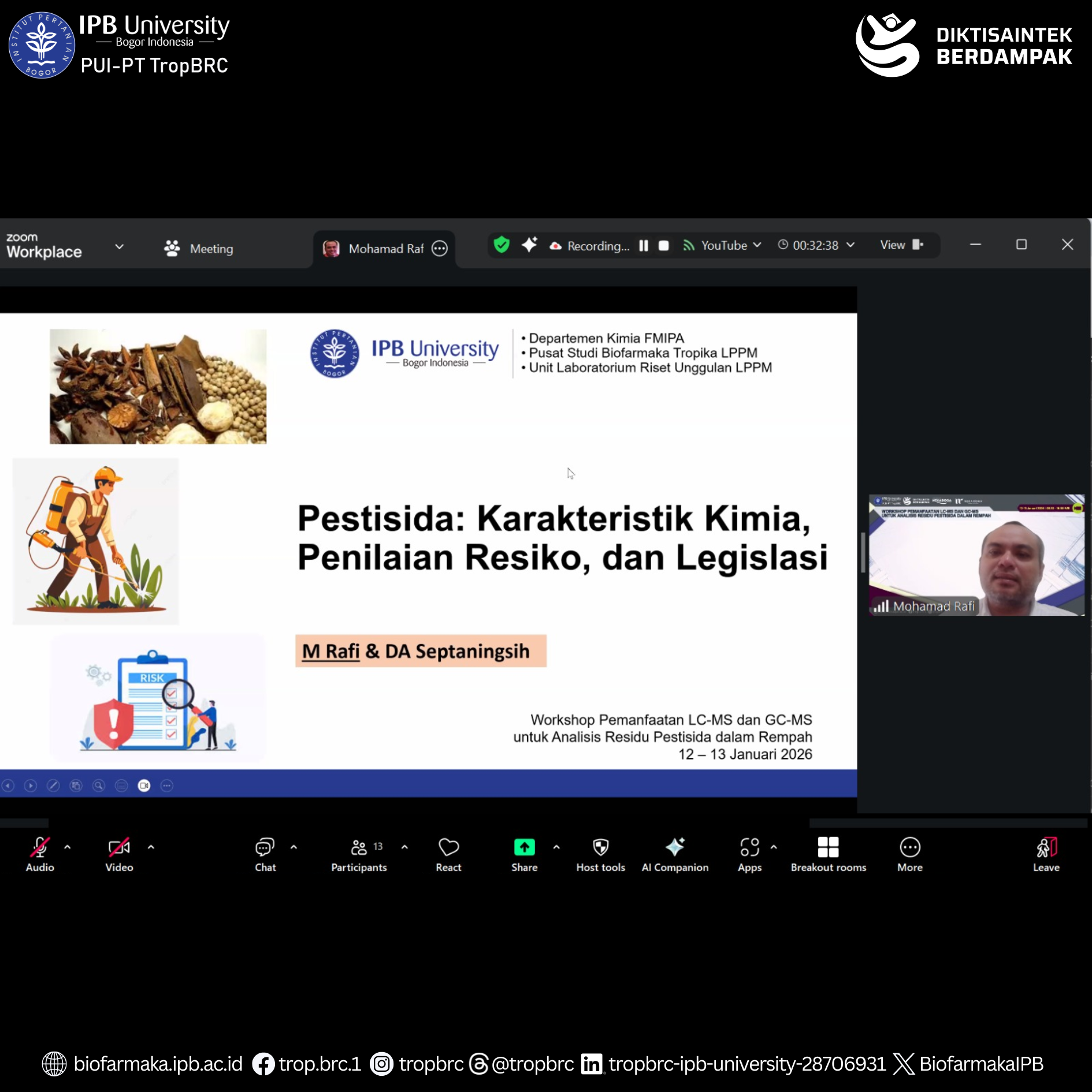
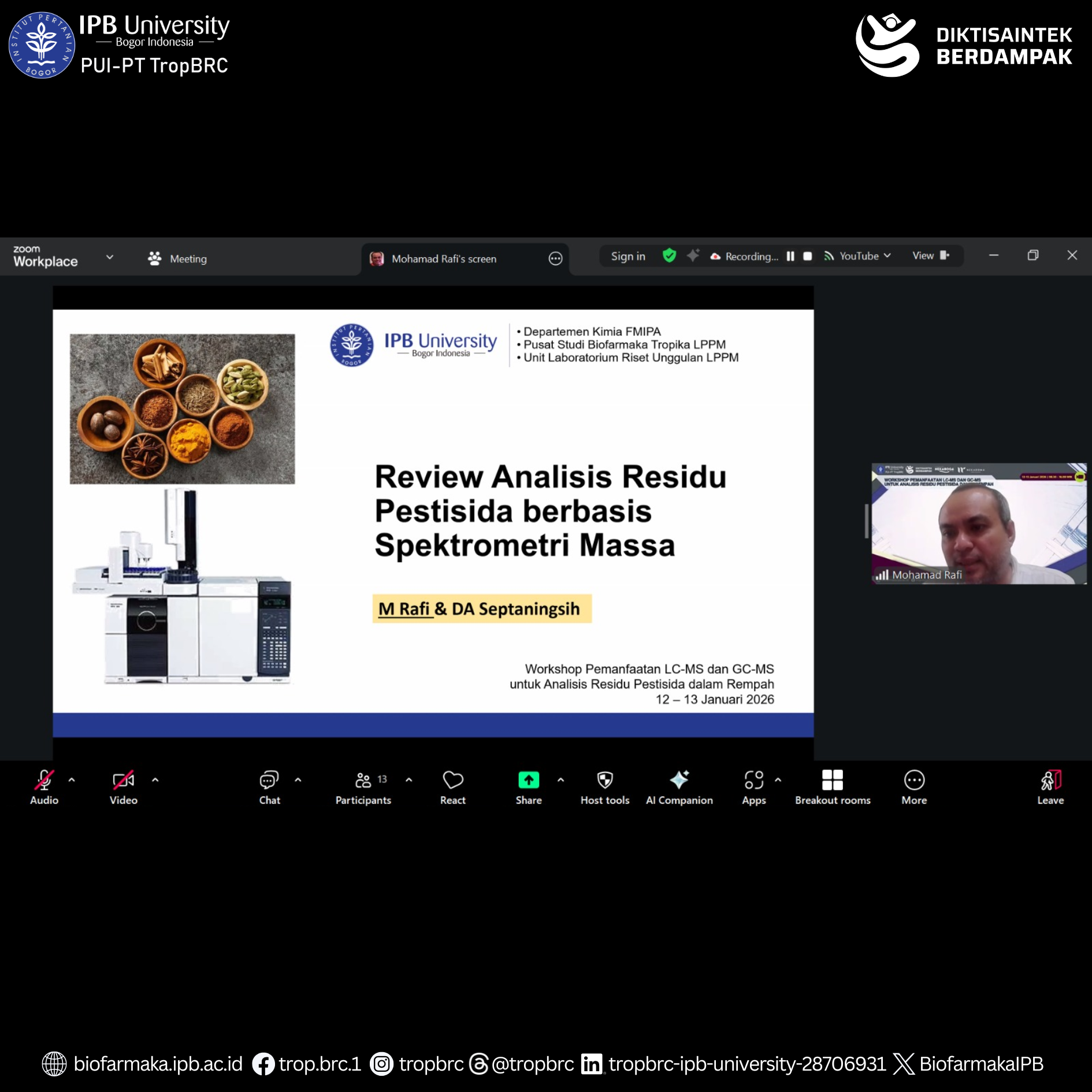
The workshop was officially opened by the Head of TropBRC, Prof. Dr. Mohamad Rafi, S.Si., M.Si., who emphasized the importance of controlling pesticide residues to ensure food safety and enhance the competitiveness of spice products in both national and global markets. On the first day, participants received materials on the chemical characteristics of pesticides, risk assessment, and regulatory aspects governing pesticide residues. In addition, participants were provided with a comprehensive overview of mass spectrometry-based residue analysis as a foundation for state-of-the-art analytical methods.
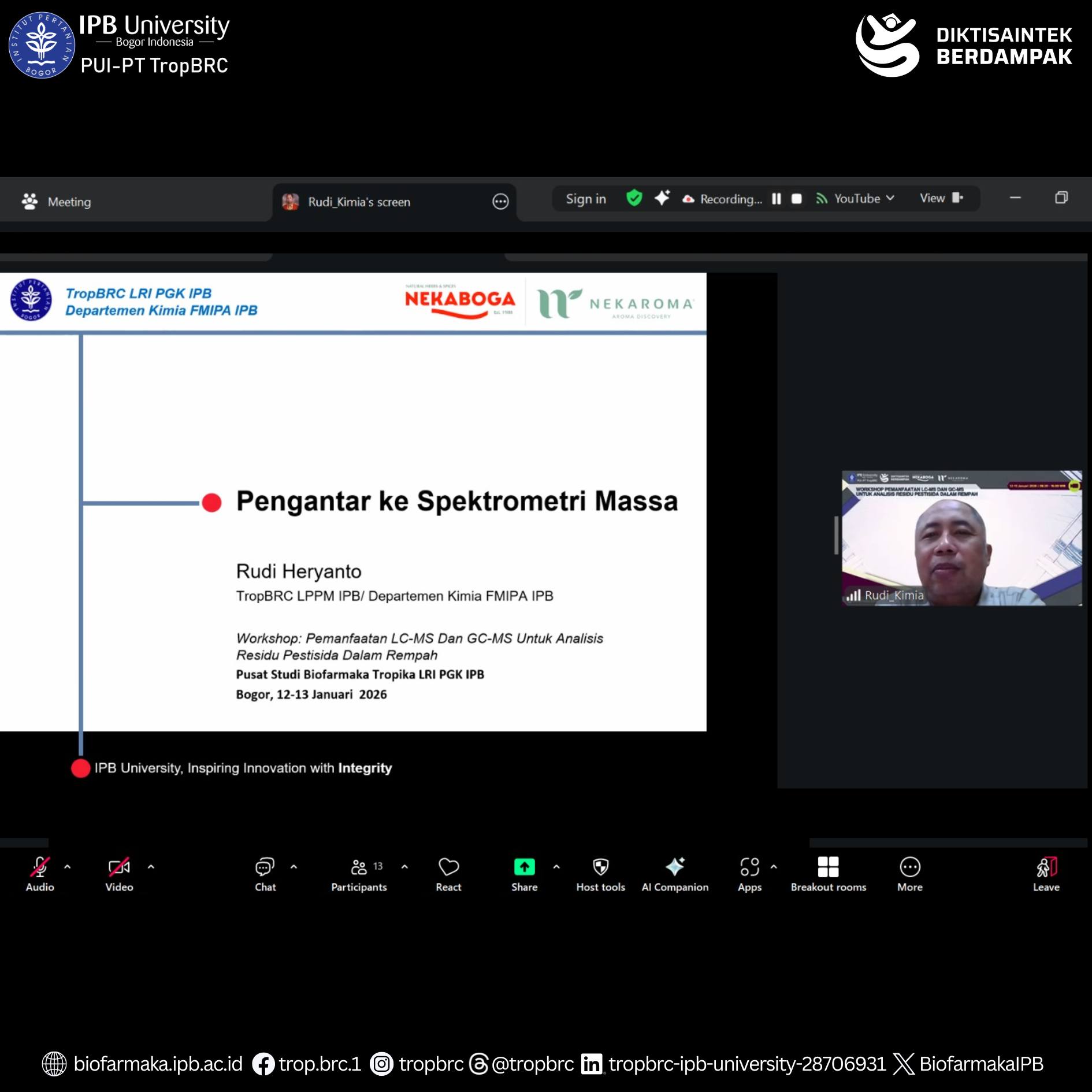
The subsequent session was delivered by Dr. Rudi Heryanto, S.Si., M.Si., who discussed the fundamental principles of mass spectrometry, including the use of LC-MS and GC-MS instruments equipped with triple quadrupole tandem mass spectrometers for sensitive and selective pesticide residue analysis. Through this session, participants gained an in-depth understanding of the instruments’ capabilities in detecting residues within complex spice matrices.
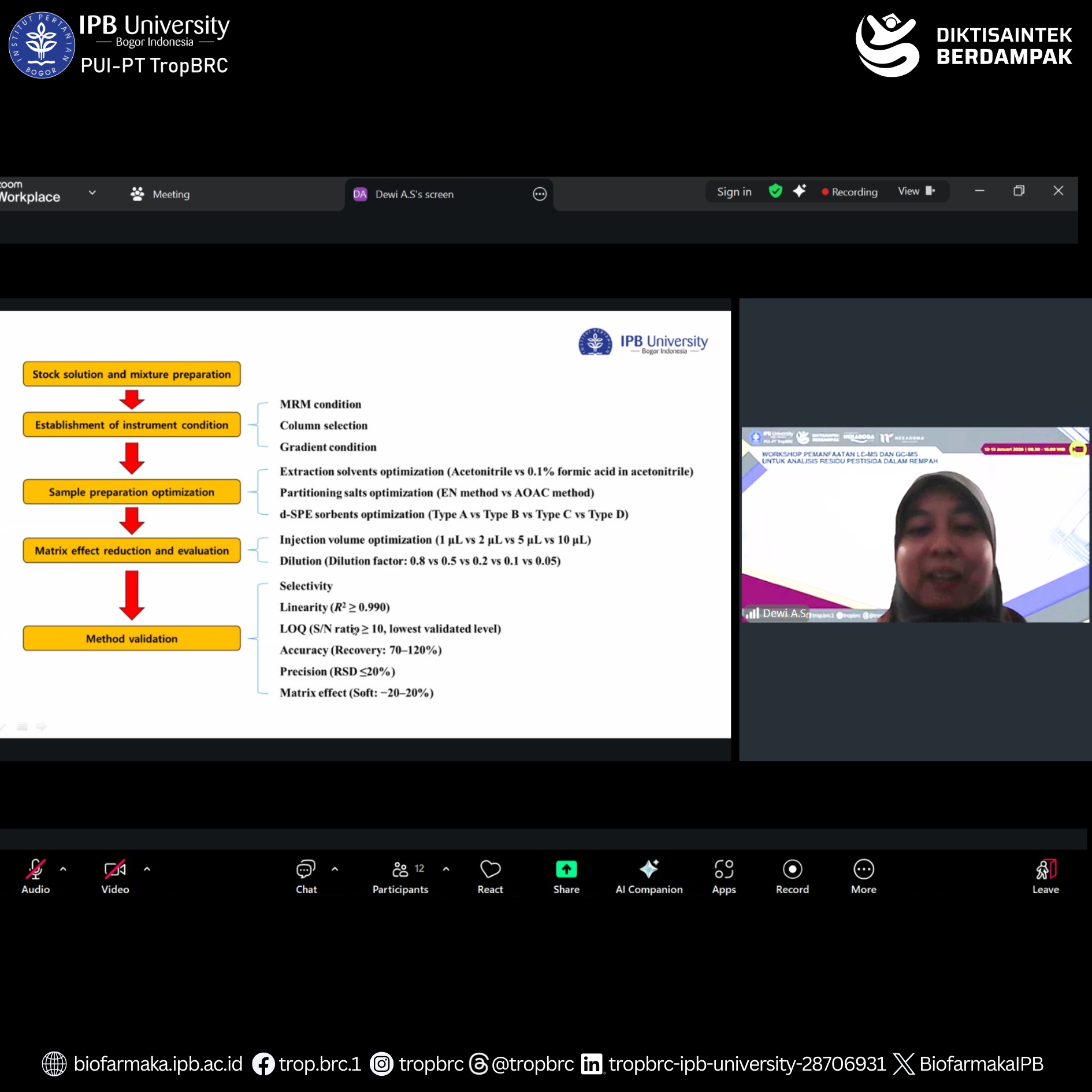
On the second day, the workshop focused on technical and applied aspects. Dr. Dewi Anggraini Septaningsih, S.Si., M.Si., presented material on sample preparation techniques for pesticide residue analysis using mass spectrometry. The activities continued with discussions on analytical method development, matrix effects, and method validation and quality control procedures, delivered by Dr. Rudi Heryanto and Prof. Dr. Mohamad Rafi. Interactive discussions further enriched the workshop, providing participants with opportunities to explore challenges and solutions in residue analysis of spices.
The workshop received positive feedback from participants, particularly regarding the completeness of the materials, clarity of presentations, and the friendliness and professionalism of the TropBRC staff. Through this activity, TropBRC reaffirmed its commitment to strengthening synergy with industry in the application of advanced analytical technologies to support the development of safe, high-quality, and competitive spice products. Moving forward, collaboration between academia and industry is expected to further reinforce science-based innovation for the advancement of Indonesia’s spice sector.

✍️ Author & Editor: Titis Arifiana, S.Si.
📸 Documentation: Workshop Team TropBRC