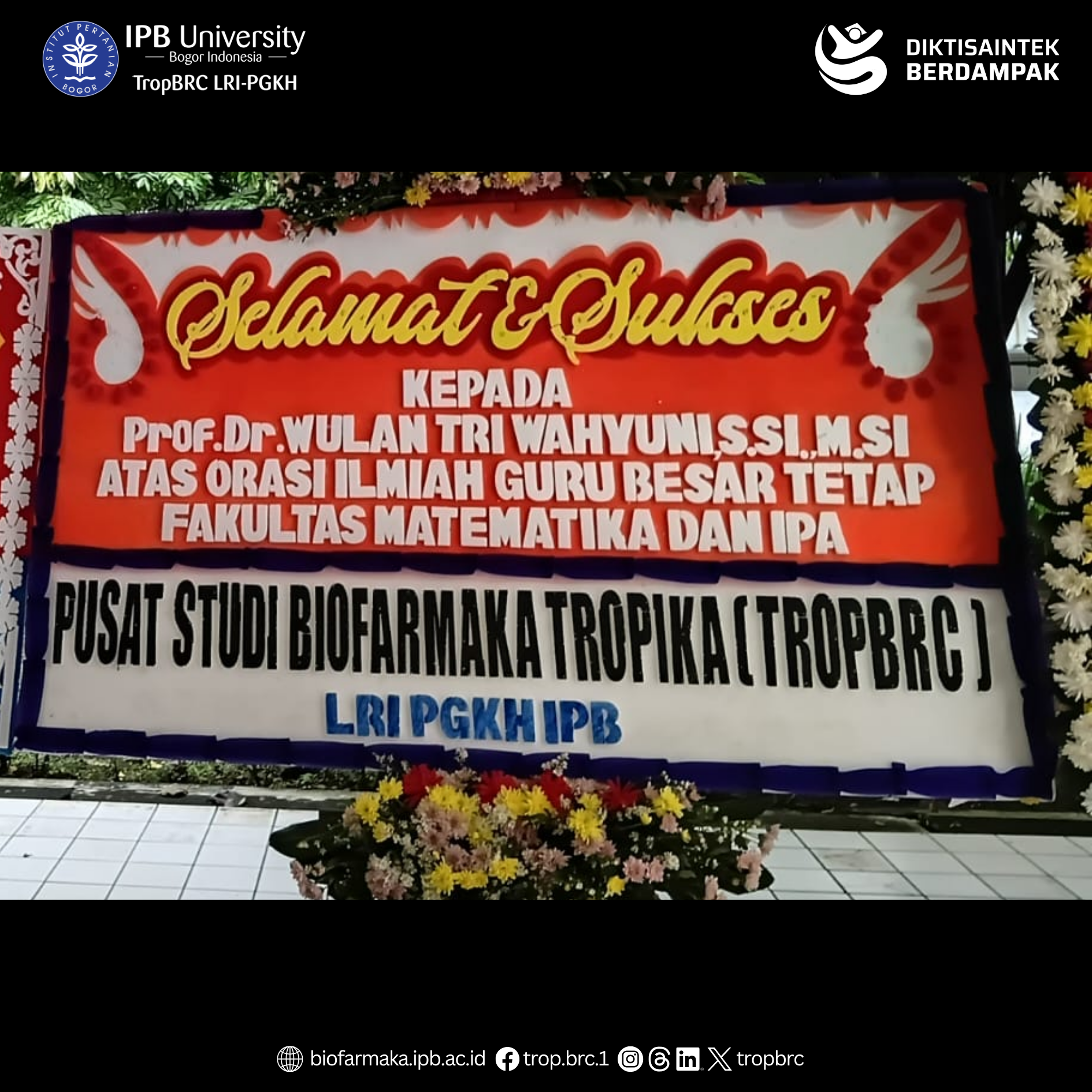
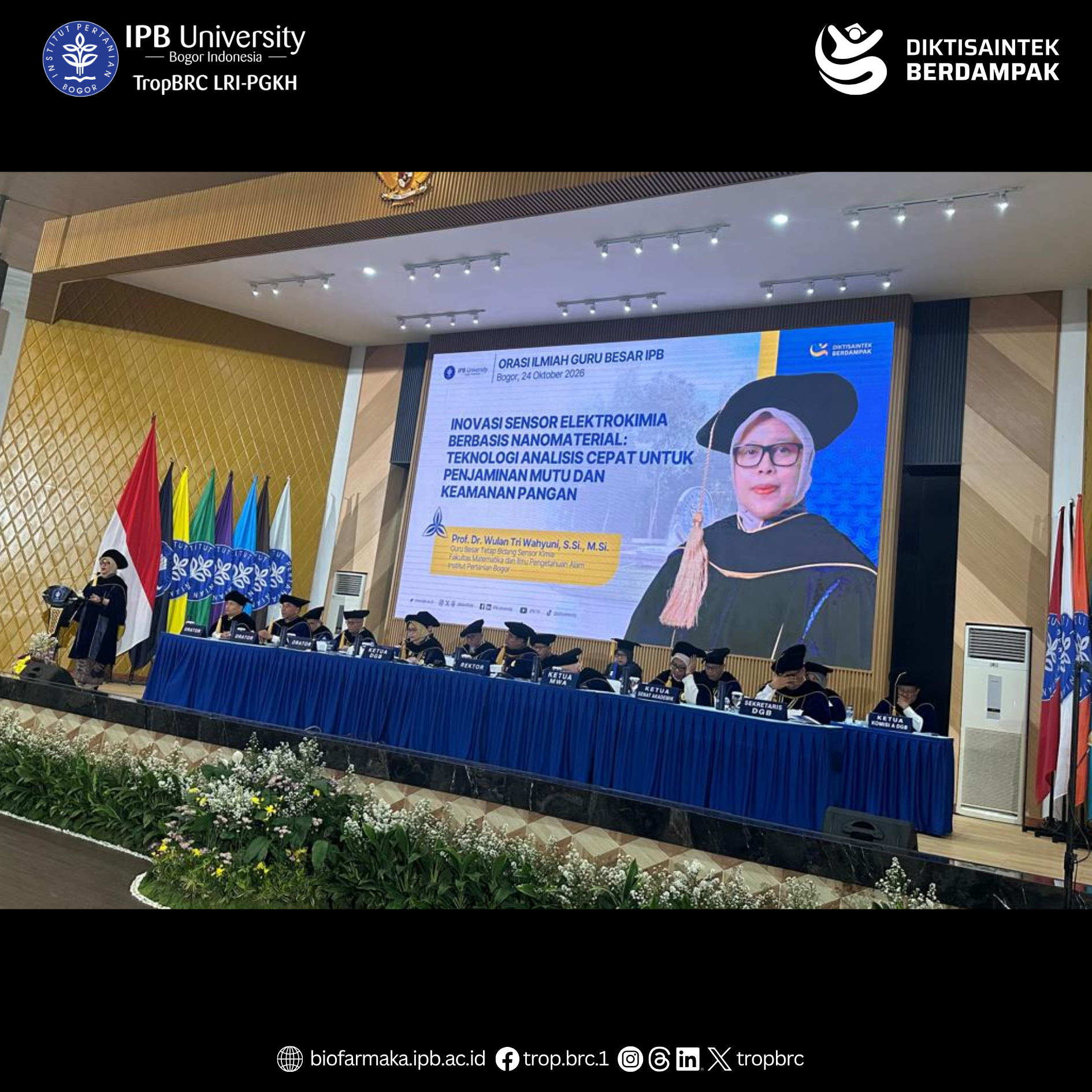
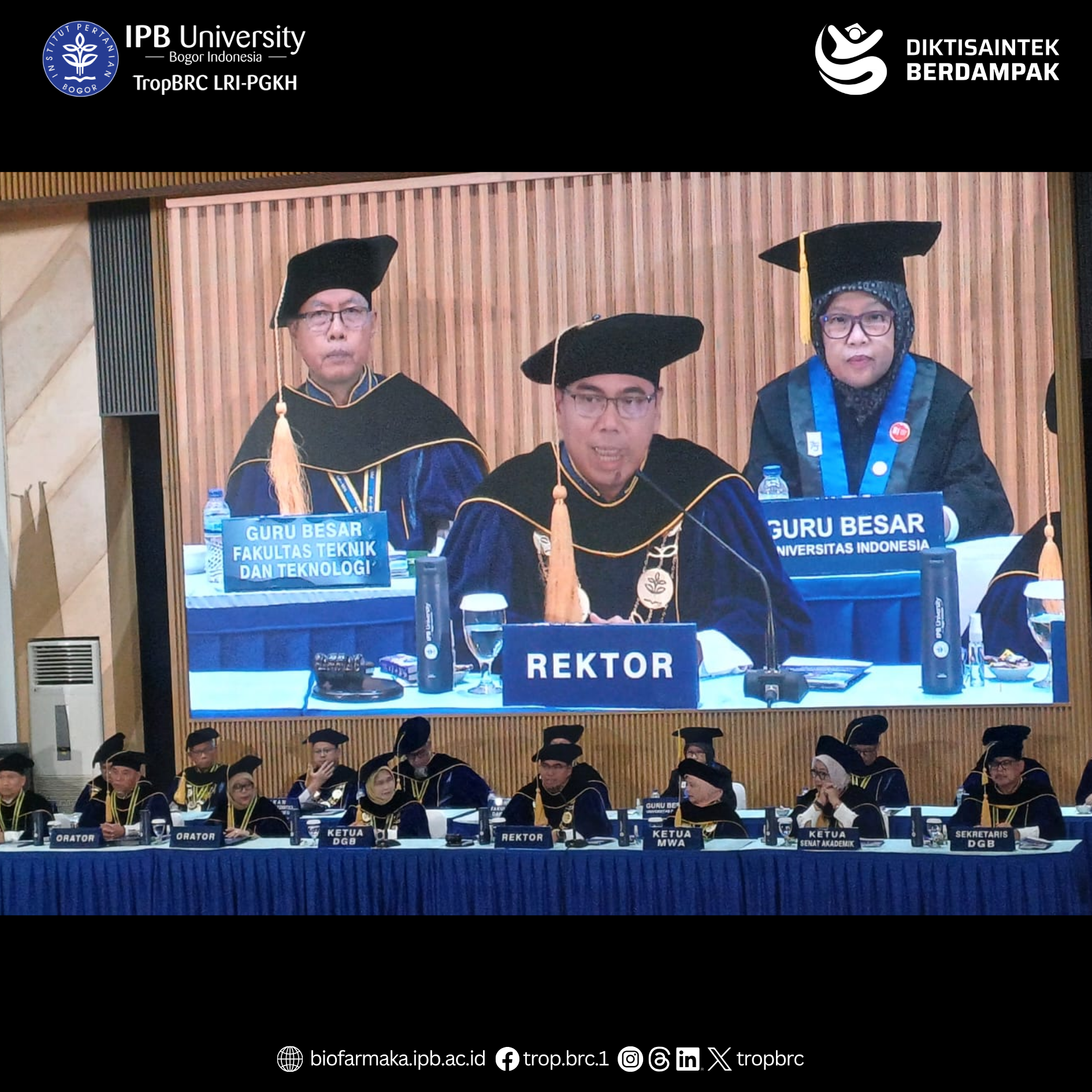
The Tropical Biopharmaca Research Center (TropBRC) LRI-PGKH IPB University proudly congratulates Prof. Dr. Wulan Tri Wahyuni S, S.Si., M.Si., on her scientific oration. Delivered at the Andi Hakim Nasution Auditorium on October 24, 2026, her address highlighted a major breakthrough in agricultural technology. Having achieved her professorship in Chemical Sensor Science earlier in August 2026, she presented pioneering research on food safety nanosensors. This rapid analytical technology aims to transform quality assurance by addressing pesticide residues, chemical leaching, and food fraud. Consequently, these vital innovations provide practical tools for maintaining agricultural safety across the nation.
Transforming Detection with Food Safety Nanosensors
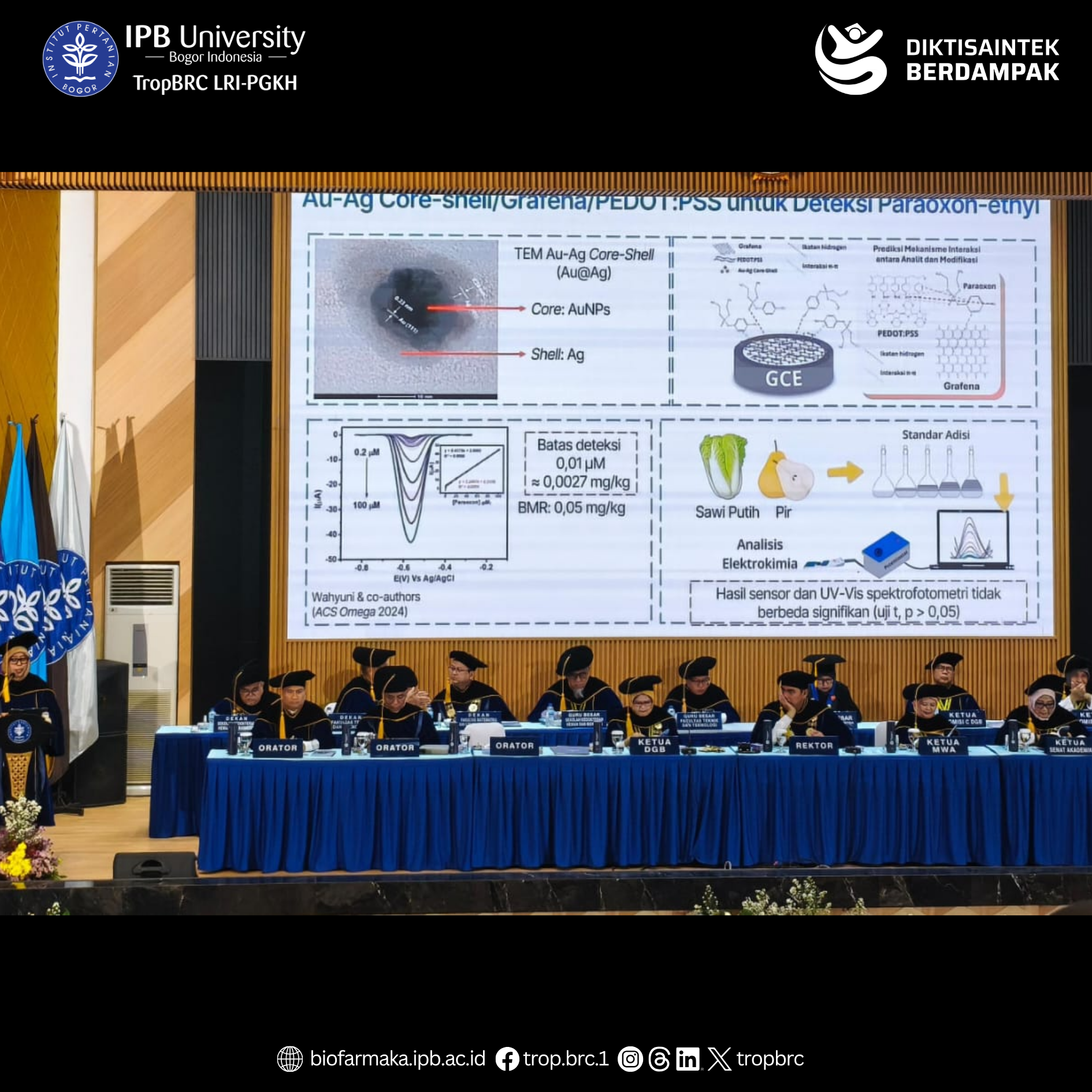
Prof. Wulan designed these electrochemical devices to minimize serious health risks effectively. In practice, these portable testing tools function similarly to compact blood glucose meters or an electronic tongue. The sensors utilize a signal transducer and electrodes to measure electrical currents during chemical reactions. As a result, they can quantify target contaminants accurately and swiftly in various fresh and processed food products.
To enhance overall performance, Prof. Wulan modified the electrode surfaces using advanced materials. Specifically, she incorporated graphene, carbon nanotubes, and metal nanoparticles. Therefore, this modification significantly improves device sensitivity and selectivity. Furthermore, it expands the active measurement area and reduces electrical resistance, which accelerates signal transmission and lowers activation energy. Because of these enhancements, the devices can easily detect trace contamination. Moreover, the combined nanomaterials deliver precise signals without optical interference. Ultimately, the sensors seamlessly analyze cloudy or deeply colored food samples that traditional methods struggle with.
Guaranteeing Authenticity in Agricultural Products
Importantly, these sensors deliver high-accuracy screening across essential agricultural domains. First, they offer a rapid field solution for agricultural pesticide detection directly on the farms. For example, sensors utilizing carbon nanotubes and gold nanorods successfully identify dangerous chemicals on site. They can detect these residues in crops like apples, cabbage, and cucumbers well below maximum regulatory limits.
Furthermore, this innovation actively prevents food fraud by verifying the authenticity of high-value commodities. The continuous development of food safety nanosensors will undoubtedly elevate Indonesia’s food security standards. TropBRC IPB University remains committed to supporting such transformative research, ensuring superior food safety and authenticity for consumers everywhere.
✍️ Author & Editor: Tiest
📸 Documentation: TropBRC Team