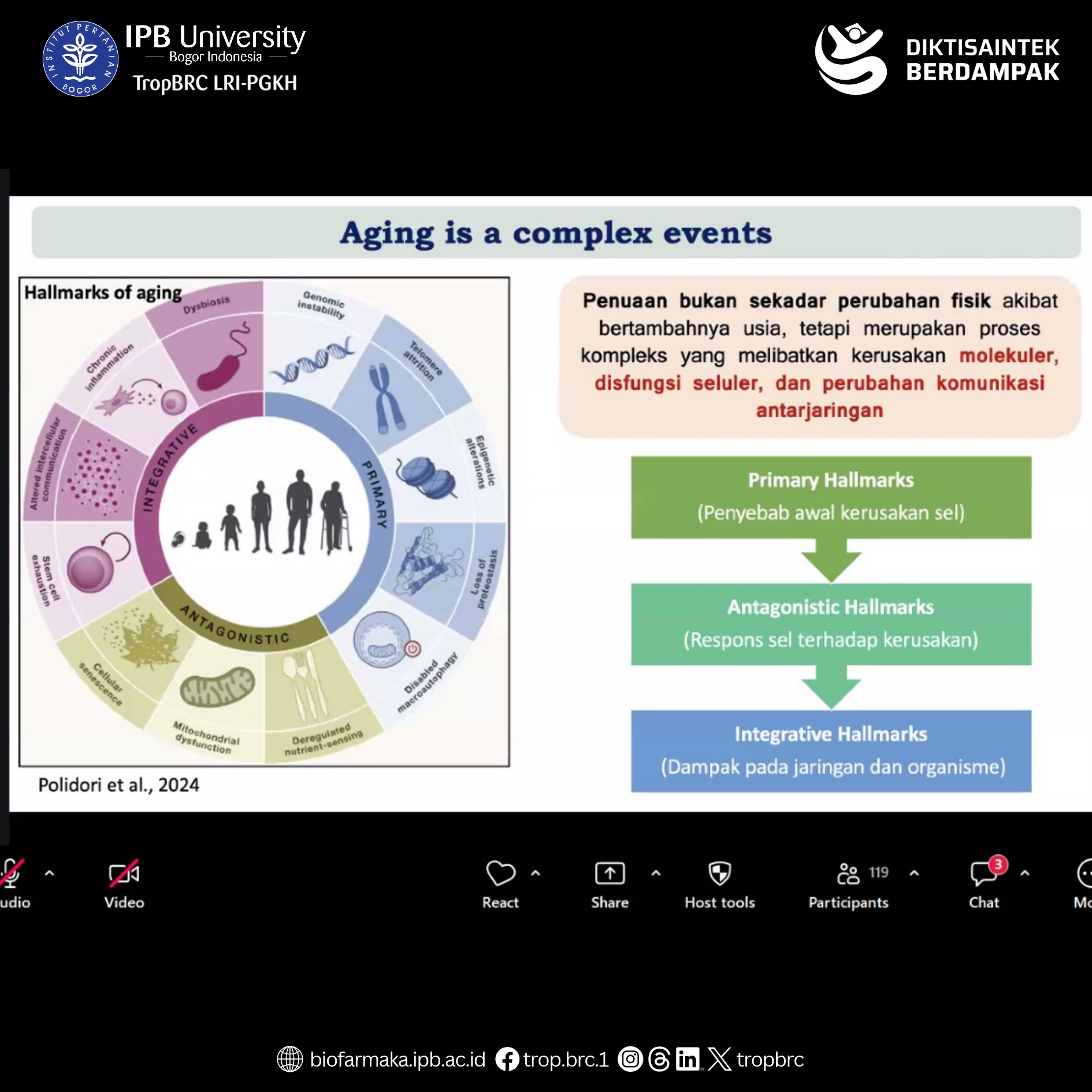
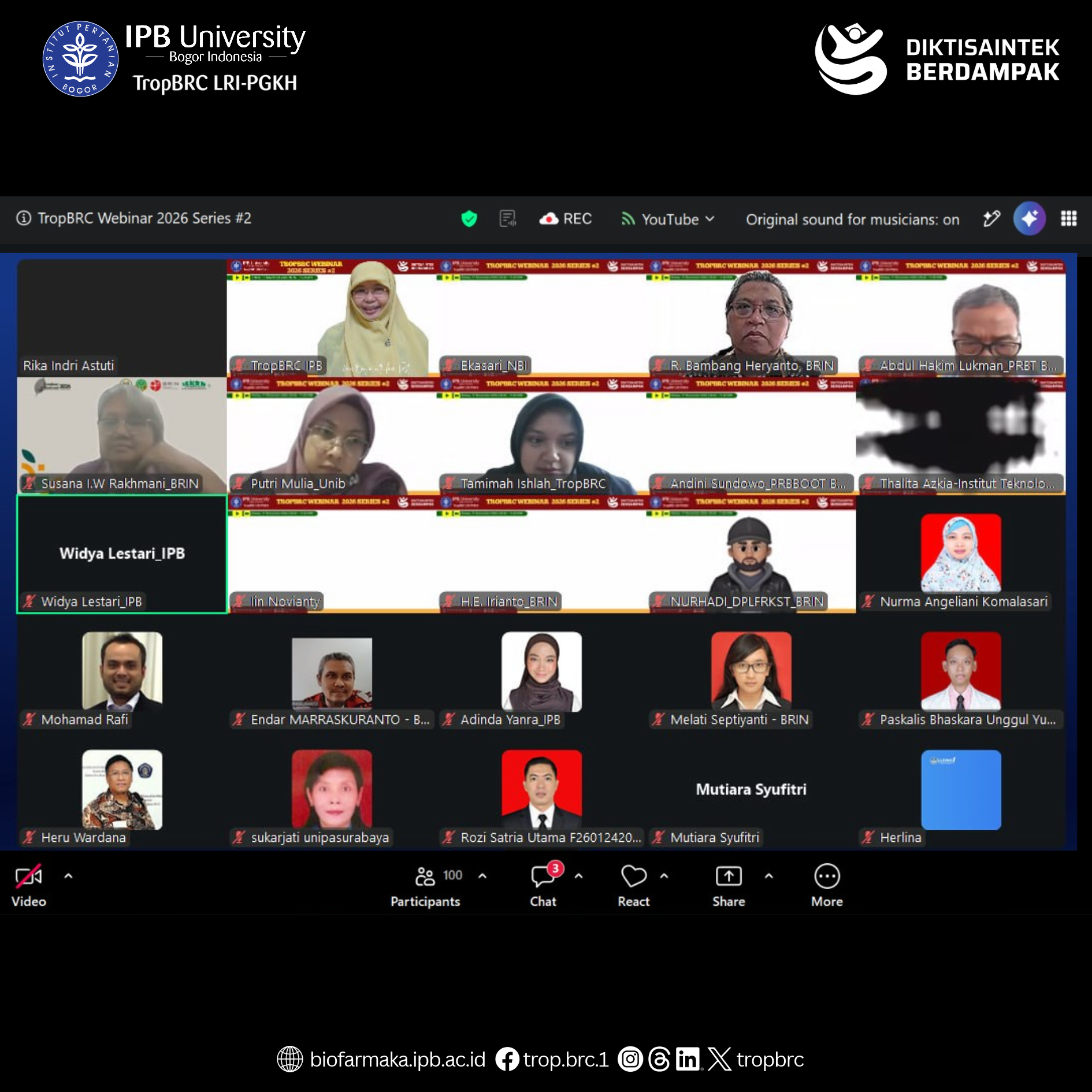
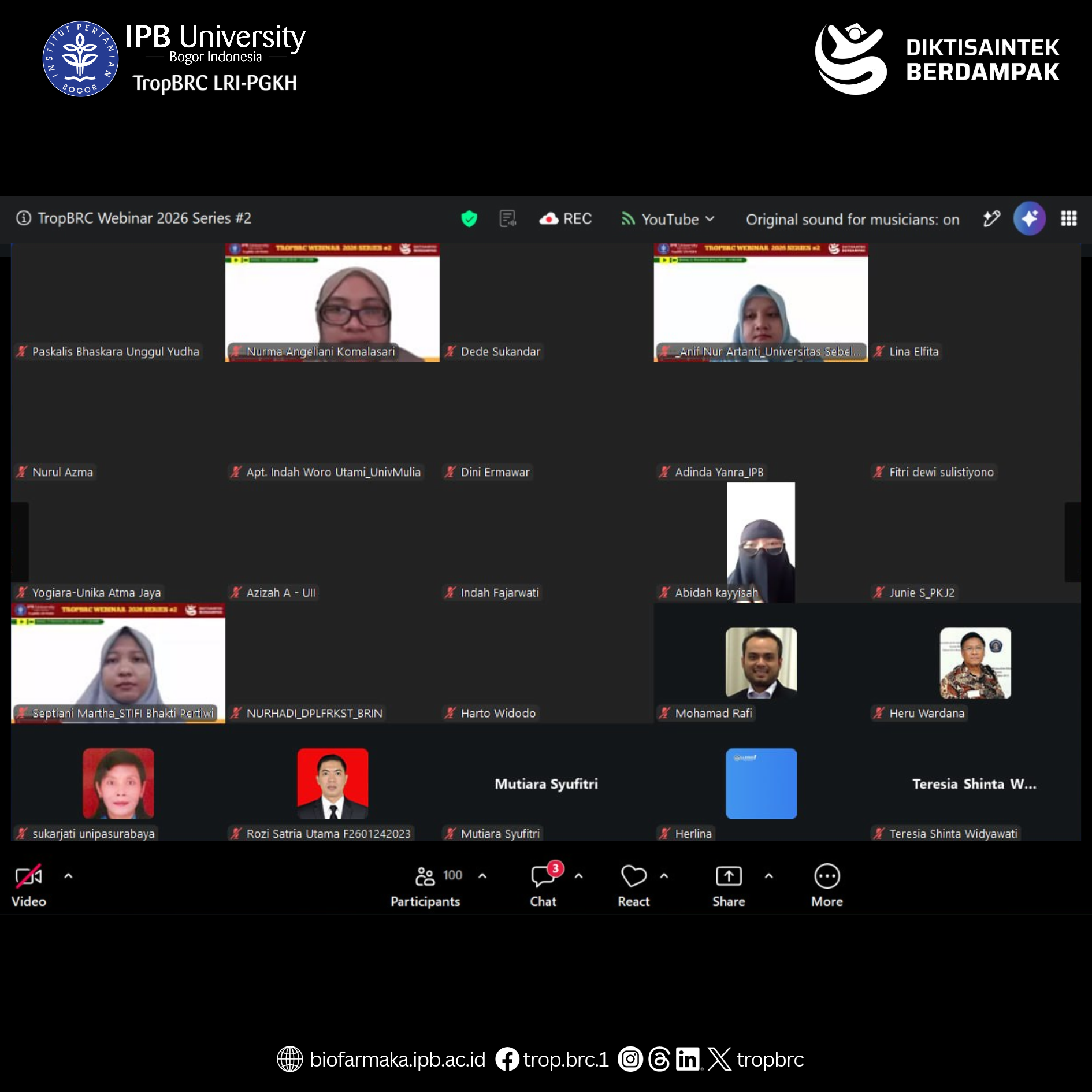
Cellular aging involves more than visible wrinkles. It reflects cumulative cellular damage from internal oxidative stress. External factors like ultraviolet (UV) radiation, pollution, and environmental stress also accelerate this process. On Tuesday, November 17, 2026, the Tropical Biopharmaca Research Center (TropBRC) LRI-PGKH IPB University, hosted TropBRC Webinar 2026 Series #2. The event examined how natural anti-aging compounds can slow these processes.
Tamimah Shafwatul Ishlah, S.Si., M.Si., moderated the session. The webinar featured Prof. Dr. Rika Indri Astuti, S.Si., M.Si., a TropBRC researcher. She also lectures at the Department of Biology, Faculty of Mathematics and Natural Sciences, IPB University. Prof. Rika explained how researchers screen bioactive ingredients using yeast models. Specifically, they use Saccharomyces cerevisiae and Schizosaccharomyces pombe. These microorganisms share about 30% of their genes with humans and complete their life cycles in around 14 days. Therefore, yeast models offer a practical, time-efficient, and cost-effective platform before further testing.
Next, Prof. Rika presented research on Indonesian essential oils, including clove, nutmeg, and patchouli oils. Eugenol-rich clove oil (Syzygium aromaticum) extended yeast cell lifespan and delayed cellular aging. It also activated DNA repair genes under mutagenic stress. However, patch testing on 33 human volunteers showed relatively high skin irritation. This result highlights the need for careful formulation and dosage. In contrast, nutmeg oil showed the strongest potential to reduce wrinkles in UVB-exposed skin with very low irritation. Meanwhile, patchouli oil offered balanced anti-aging benefits with no observed skin irritation. Together, these findings prove that skincare development must assess both biological efficacy and skin compatibility.
Natural Anti-Aging Compounds and Microbial UV Protection
Beyond plant extracts, TropBRC researchers also studied natural photoprotective substances from soil microorganisms. They isolated eumelanin, a natural pigment, from Streptomyces sp. NTB 42. This bacterium was obtained from the maize rhizosphere. At 200 µg/mL, this bacterial eumelanin achieved a sun protection factor (SPF) of approximately 22. Its protection is comparable to the synthetic sunscreen agent oxybenzone. Moreover, it provides broad-spectrum UVA and UVB protection with superior protective characteristics. Adding just 0.01% bacterial eumelanin to commercial sunscreens (SPF 20, 30, and 50++) significantly increased their SPF values. Thus, it can enhance existing formulations without relying heavily on synthetic additives.
Overall, Indonesia’s biodiversity—spanning aromatic plants, spices, and soil microorganisms—is a valuable resource. It provides promising natural anti-aging compounds and photoprotective agents. By combining cellular screening with skin-based evaluations, TropBRC advances safe and effective skincare research.
The Director of TropBRC, Prof. Dr. Mohamad Rafi, S.Si., M.Si., closed the event and expressed his hope that the webinar would be beneficial. Readers interested in exploring Prof. Rika Indri Astuti’s complete presentation can watch the official recording of TropBRC Webinar 2026 Series #2 on the TropBRC YouTube channel.



✍️ Author & Editor: Tiest
📸 Documentation: TropBRC Webinar Team