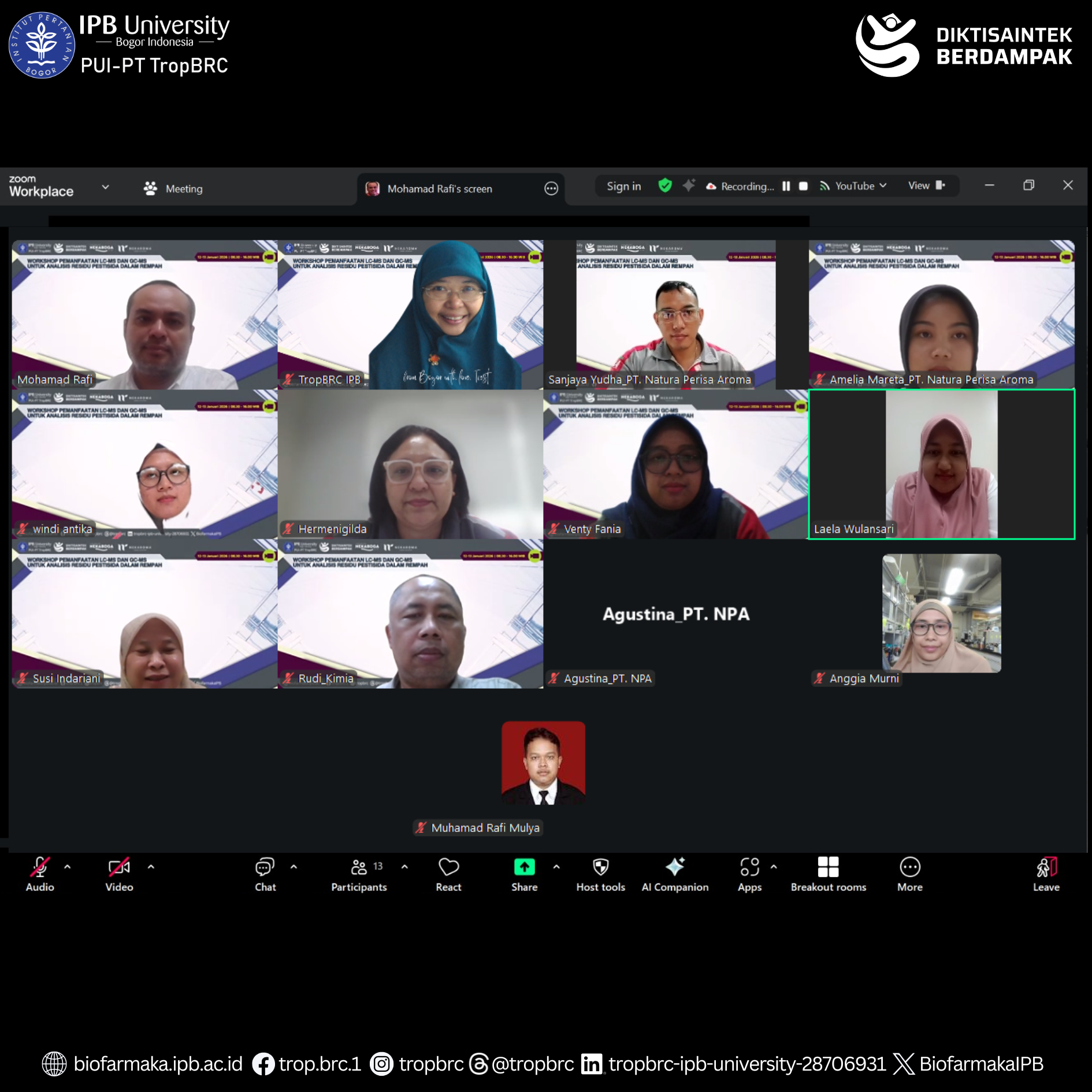
On January 14, 2026, the Tropical Biopharmaca Research Center (TropBRC) organized an intensive workshop. This research center is a part of LRI-PGKH IPB University. The special event focused directly on spice residue analysis. Overall, this strategic initiative aims to improve spice product quality and safety. It achieves this goal through the application of modern analytical technologies. Five dedicated professionals from PT Natura Perisa Aroma attended the training. Also, expert speakers from IPB University and Universitas Pertahanan joined the event.
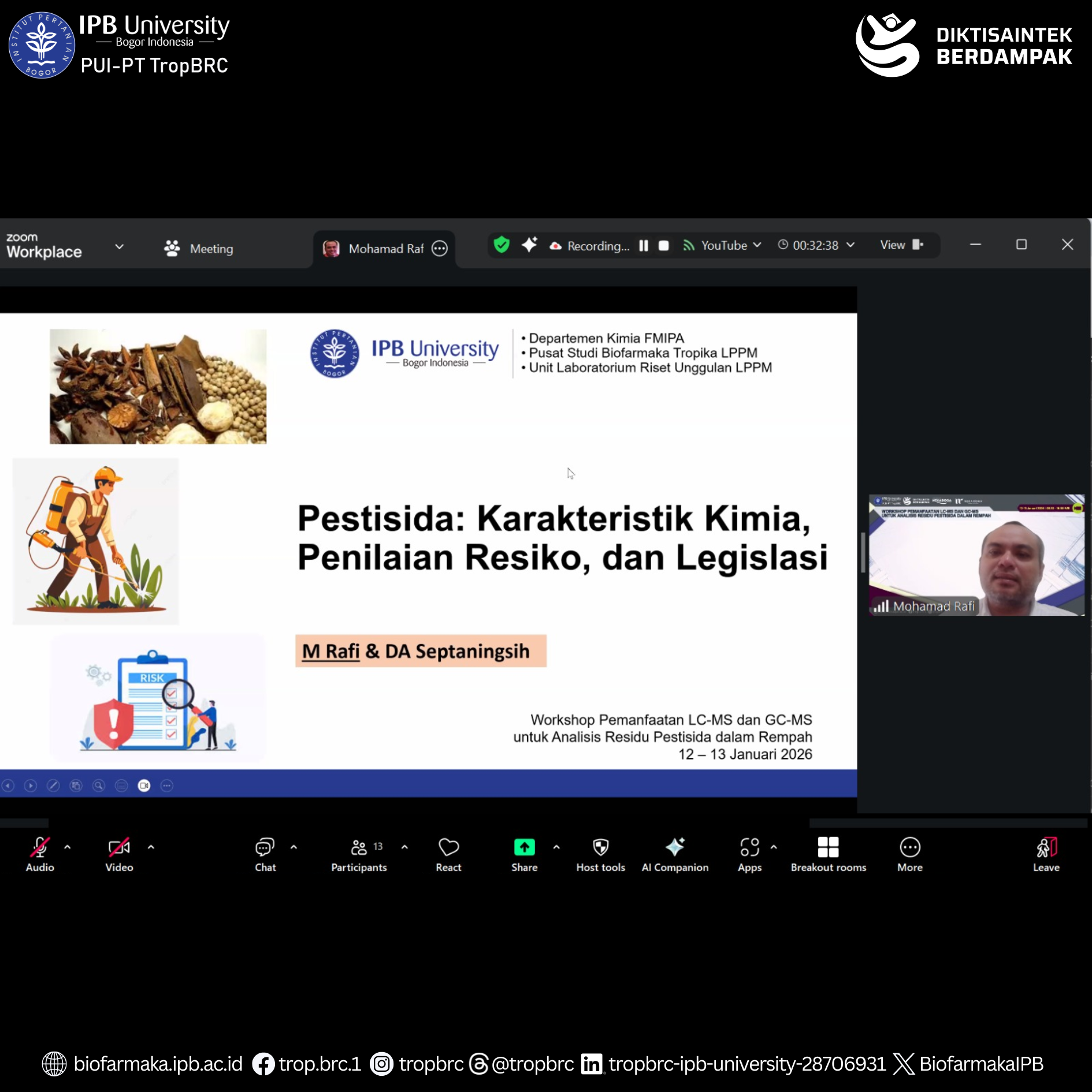
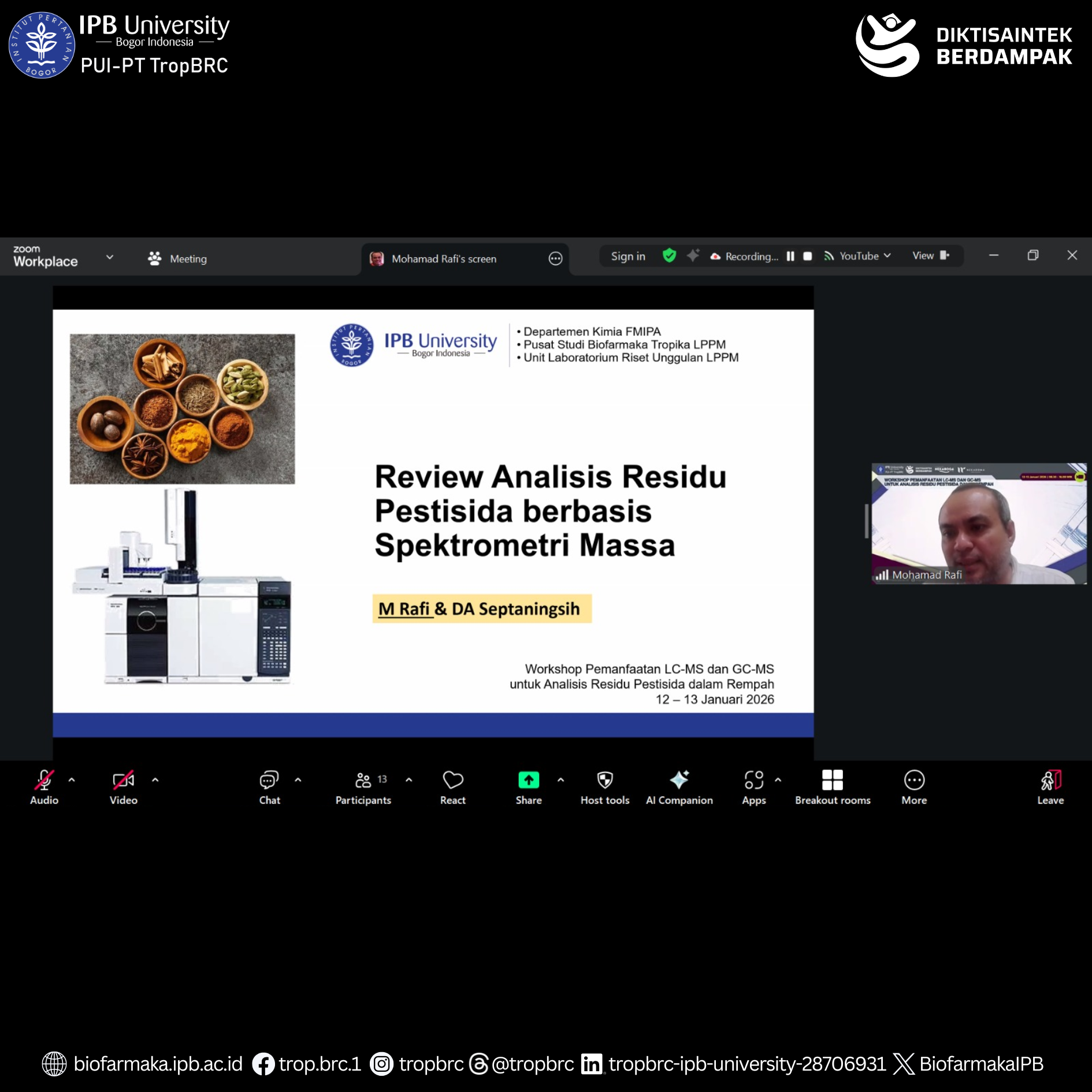
Prof. Dr. Mohamad Rafi, S.Si., M.Si., Director of TropBRC, officially opened the workshop. He strongly emphasized the critical importance of controlling pesticide residues. Because of this, producers can ensure consumer food safety. It also enhances the competitiveness of Indonesian spices in global markets. First, participants learned about the chemical characteristics of various pesticides. They explored risk assessment protocols and current regulatory limits. Next, experts provided a thorough overview of mass spectrometry. This evaluation serves as a solid foundation for modern analytical methods.
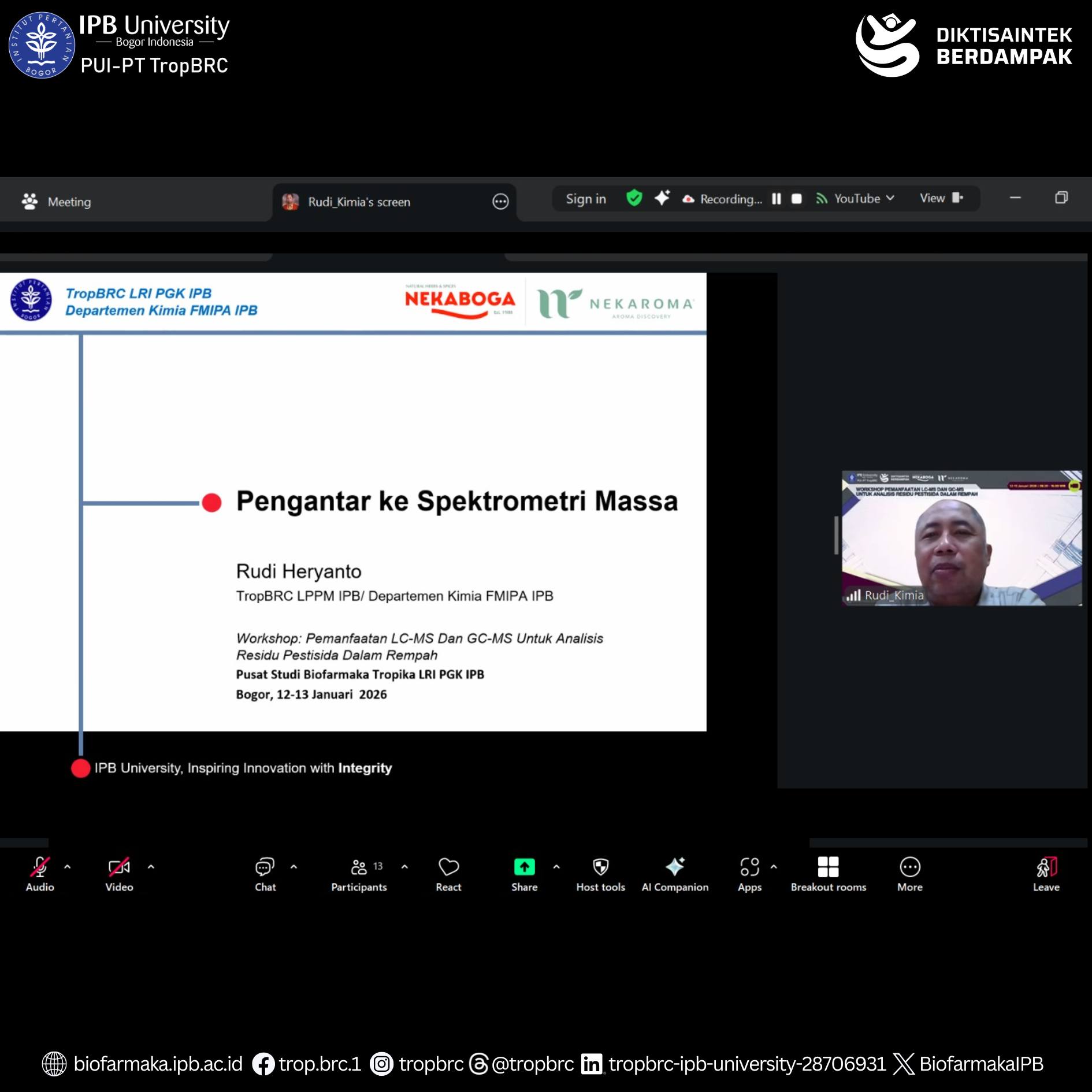
Then, Dr. Rudi Heryanto, S.Si., M.Si., discussed the fundamental principles of mass spectrometry. He detailed the use of advanced LC-MS and GC-MS instruments. These specific tools use triple quadrupole tandem mass spectrometers for highly sensitive detection. As a result, participants clearly understood how to identify trace contaminants. They can now confidently analyze these elements within complex spice matrices.
Advancing Spice Residue Analysis for Food Safety
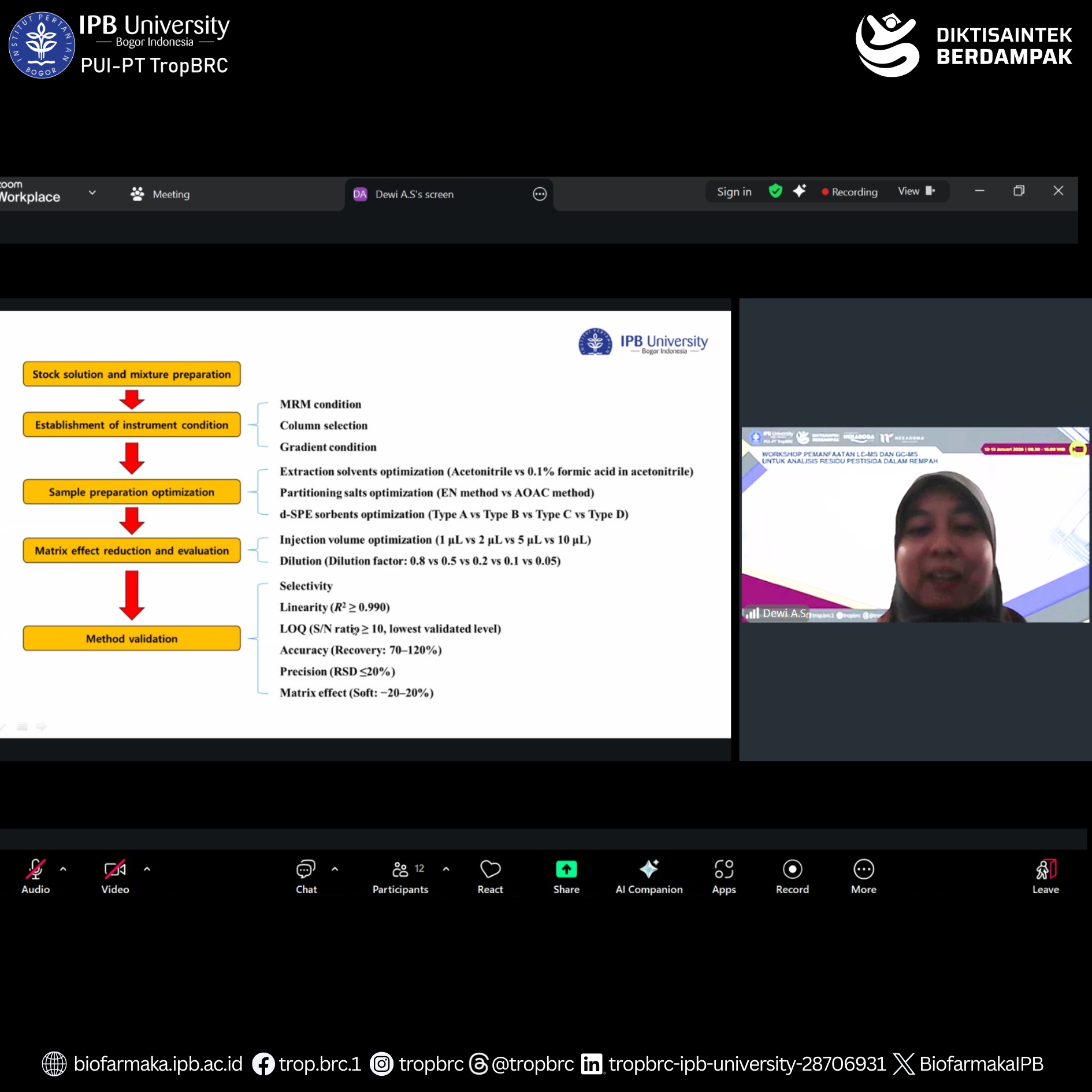
On the second day, the workshop shifted to technical and practical applications. First, Dr. Dewi Anggraini Septaningsih, S.Si., M.Si., presented essential sample preparation techniques. She tailored these methods directly for spice residue analysis using mass spectrometry. After that, practical activities continued with extensive discussions. The group covered analytical method development, matrix effects, and strict method validation. Dr. Rudi Heryanto and Prof. Dr. Mohamad Rafi actively led these crucial topics. Additionally, interactive discussions gave participants valuable opportunities to explore specific industry challenges.
Overall, the workshop received overwhelmingly positive feedback from the participants. They truly appreciated the completeness of the educational materials. They also praised the clear expert presentations and professional TropBRC staff. Looking ahead, this successful collaboration will reinforce science-based innovation. It will directly support the sustainable advancement of Indonesia’s agricultural and spice sectors.

✍️ Author & Editor: Tiest
📸 Documentation: TropBRC Workshop Team